News
How Separable Connectors Improve Safety in Medium Voltage Switchgear Installations?
In the world of medium voltage distribution, safety is not just a priority—it is the very foundation upon which reliable power systems are built. Separable connectors, often overlooked as simple components, play a pivotal role in safeguarding both personnel and equipment during installation, maintenance, and operation. At Taili Electric Co., Ltd., we have spent decades refining these critical interfaces to ensure that when you make a connection, you are also creating a barrier against faults, arcing, and unplanned outages. Our engineering philosophy centers on the idea that a well-designed separable connector transforms a potential hazard into a controlled, predictable interface. By incorporating advanced materials and precision manufacturing, our factory delivers solutions that exceed international standards, providing peace of mind in every joint.
Modern medium voltage switchgear installations demand components that can withstand harsh environments while enabling quick and safe interventions. Separable connectors are the unsung heroes in this ecosystem, allowing for visible disconnection and testing without exposing workers to live parts. Unlike traditional bolted connections, which require heavy tools and close proximity to energized gear, our separable connectors offer a touch-safe interface. This fundamental design shift drastically reduces the risk of arc flash incidents, which remain one of the most dangerous events in electrical work. Throughout this article, we will dissect the technical and operational advantages of these devices, demonstrating why they are indispensable for modern safety protocols. As we guide you through the specifics, remember that every component we produce is a testament to our commitment to protecting lives and assets.
Contents
- What Makes Separable Connectors a Critical Safety Component in Medium Voltage Switchgear?
- How Do Separable Connectors Reduce Arc Flash Risks During Installation and Maintenance?
- Why Are Material and Design Parameters Essential for Reliable Performance?
- How Does Our Factory Ensure Consistent Quality in Cable Accessories?
- Summary: The Safety Edge of Separable Connectors
- Frequently Asked Questions (FAQ)
What Makes Separable Connectors a Critical Safety Component in Medium Voltage Switchgear?
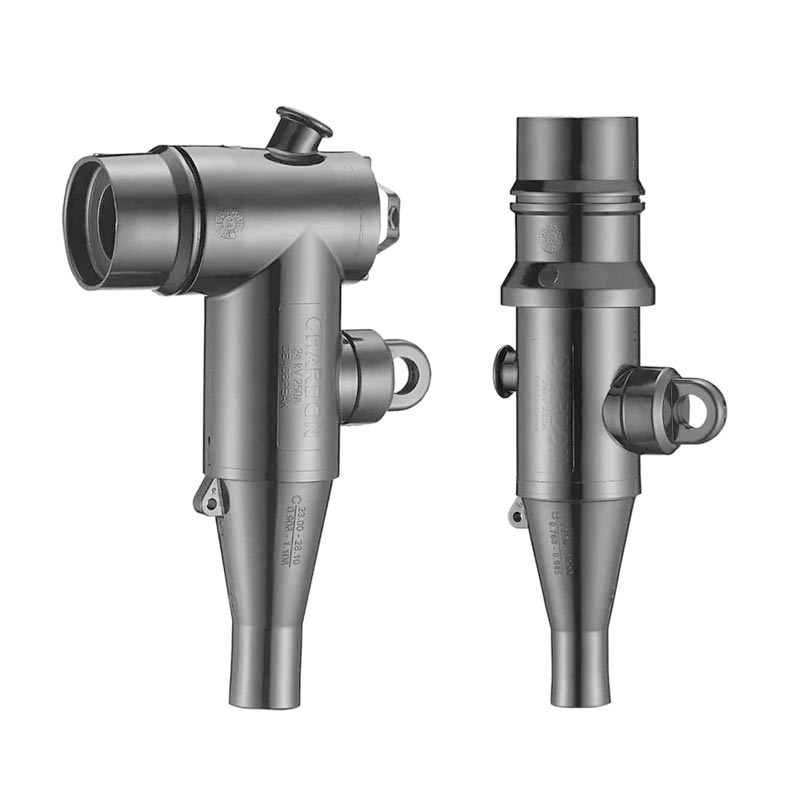
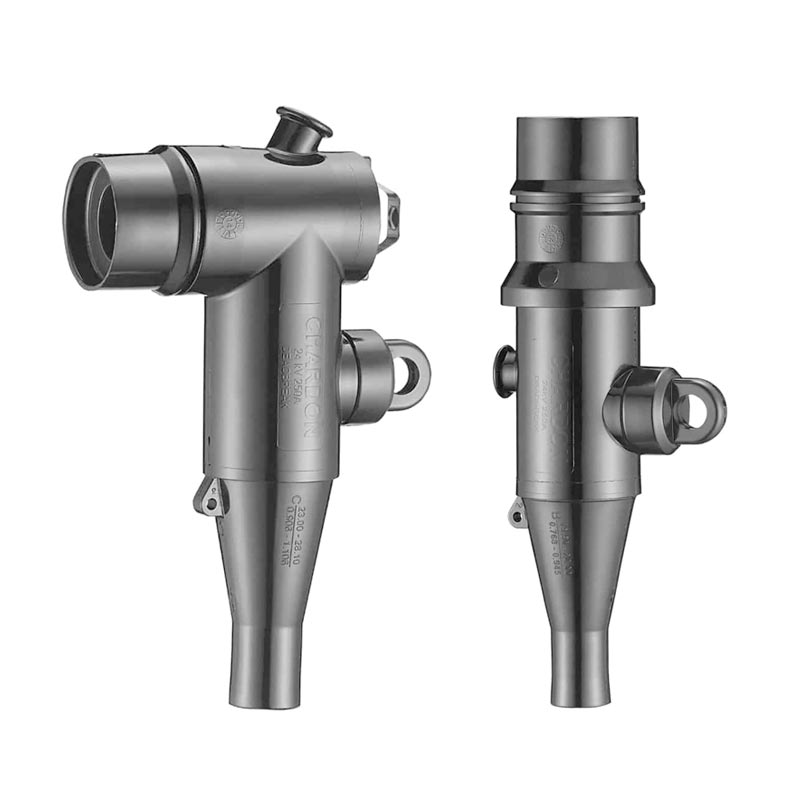
Separable connectors are the interface between the power cable and the switchgear, and their design directly influences the overall safety of the installation. Unlike fixed connections, separable connectors allow for a controlled disconnection point. This means that during routine checks or emergencies, technicians can isolate a circuit without dismantling the entire assembly. Our factory has engineered these connectors to provide a clear and visible break, which is a fundamental requirement for lockout/tagout procedures. The ability to verify isolation visually eliminates guesswork and dramatically lowers the chance of accidental contact with energized parts. In medium voltage systems, where voltages typically range from 5kV to 35kV, even a minor mistake can lead to catastrophic consequences. By integrating capacitive test points into our designs, we enable non-intrusive voltage detection, adding another layer of verification before any physical contact is made.
Furthermore, the mechanical construction of separable connectors contributes to their safety profile. They are built to withstand the magnetic forces associated with short-circuit currents. In the event of a fault, a weak connection could become a projectile or an arc ignition point. Our connectors, however, are designed with robust latching mechanisms that maintain integrity under extreme duress. The shielding layers within the connector also ensure that the electric field is evenly distributed, preventing partial discharge—a silent enemy that erodes insulation over time. At Taili Electric Co., Ltd., we view each connector as a guardian of continuity. The use of conductive rubber inserts and faraday cage designs within our cable accessories ensures that stress is managed, and there are no voids where ionization could occur. This attention to detail means that the switchgear remains safe over decades of service, not just on day one.
How Do Separable Connectors Reduce Arc Flash Risks During Installation and Maintenance?
Arc flash is a leading cause of injury among electrical workers. It occurs when insulation or isolation between conductors is breached, allowing current to travel through the air. Separable connectors mitigate this risk through several inherent design features. First, they provide a dead-break interface, meaning that the circuit is de-energized before the physical separation occurs when proper procedures are followed. However, the real safety innovation lies in the possibility of load-break variants. For applications requiring live switching, our factory produces connectors with arc-quenching technology. These devices use the pressure generated by the arc to elongate and cool it within an ablation chamber, extinguishing it safely. This capability means that operators can disconnect loads under controlled conditions without exposing themselves to blast energy.
Another critical aspect is the touch-safe design. All conductive parts are deeply recessed within insulating materials. When a separable connector is engaged, the connection is fully screened. If a technician needs to test a cable, they can use the dedicated test point or, in some designs, partially disconnect using a shotgun stick while remaining at a safe distance. Our cable accessories are engineered to interface seamlessly with standard hot-stick tools, ensuring that hands are kept away from danger zones. The table below illustrates key parameters of our most popular separable connector series, highlighting the features that directly contribute to arc flash mitigation.
| Model Series | Voltage Class (kV) | Basic Impulse Level (BIL) | Continuous Current (A) | Arc-quenching Feature | Test Point Included |
| Taili TSC-15 | 15 kV | 95 kV | 630 A | Load-break option | Yes, capacitive |
| Taili TSC-25 | 25 kV | 125 kV | 630 A | Dead-break only | Yes, capacitive |
| Taili TSC-35 | 35 kV | 150 kV | 800 A | Load-break option | Yes, with LED |
As seen in the table, our factory prioritizes high BIL ratings and test points across the range. The inclusion of load-break options in select models provides flexibility for installations where operational safety demands live switching. Beyond the hardware, the training and documentation we provide ensure that users understand the limits and capabilities of the equipment. By reducing the need to work near live parts and by controlling the arc energy when disconnection is necessary, our separable connectors form a formidable defense against arc flash incidents.
Why Are Material and Design Parameters Essential for Reliable Performance?
The performance of separable connectors is not accidental; it is the result of meticulous material science and precision engineering. The primary insulation material used in our cable accessories is EPDM rubber, chosen for its excellent dielectric strength, weather resistance, and flexibility. Unlike rigid materials, EPDM allows the connector to form a tight, interference fit with the bushing, excluding air and moisture—two primary contributors to insulation failure. Our factory employs a proprietary compounding process that enhances tracking resistance, ensuring that even if surface contamination occurs, the material will not carbonize and create a conductive path. This is particularly vital in polluted or coastal environments where salt and dust can degrade lesser materials.
Design parameters such as creepage distance, contact pressure, and shielding continuity are rigorously defined. For instance, the internal geometry of the connector must ensure that the electrical field is graded smoothly from the high-voltage conductor to the grounded shield. We achieve this through embedded semi-conductive layers that are co-molded with the insulation. This integrated design eliminates interfaces where voids could form. The table below outlines the critical design parameters we monitor during production.
| Parameter | Taili Specification | Industry Standard | Benefit |
| Conductor Crimp Depth | ±0.1 mm tolerance | ±0.3 mm | Ensures uniform contact resistance |
| Partial Discharge (at 15kV) | < 3 pC | < 10 pC | Longer insulation life, less noise |
| Shielding Resistance | < 5000 ohms | < 10,000 ohms | Effective grounding, touch safety |
| Mechanical Latching Force | 400 N minimum | 300 N minimum | Withstands vibration and fault forces |
By adhering to tighter tolerances and more stringent test limits than industry norms, our factory delivers connectors that perform predictably under stress. We also conduct routine X-ray inspections on samples to verify internal alignment. This level of detail ensures that when you install our cable accessories, you are getting a component that has been validated not just by type tests, but by consistent production quality. Material choices also extend to the conductive components: we use high-conductivity copper alloys with silver plating to minimize heating and oxidation. The combination of superior materials and exacting design parameters results in a connector that maintains its safety characteristics throughout its service life, even under thermal cycling and fault conditions.
How Does Our Factory Ensure Consistent Quality in Cable Accessories?
Quality assurance is embedded in every step of production at Taili Electric Co., Ltd. Our factory operates under a certified ISO 9001 system, but we go beyond mere compliance. We believe that safety starts with predictability, and predictability is achieved through process control. Every batch of raw material is tested for tensile strength, elongation, and dielectric properties before it enters the mixing stage. During molding, parameters like temperature, pressure, and curing time are monitored in real-time. If any parameter drifts outside the validated window, the system automatically rejects the part. This closed-loop control ensures that each connector is identical to the last, eliminating the variability that can lead to field failures. Our commitment to quality is why so many utilities and contractors trust our cable accessories for their most critical infrastructure.
Beyond the production line, we invest heavily in routine testing. Each separable connector undergoes a 100% partial discharge test before leaving our factory. This is not a sample test—it is performed on every single unit. We also verify the shielding continuity and the mechanical operation of the latching mechanism. For load-break variants, we sample and perform full-force fault-closure tests to ensure the arc-quenching system works as designed. The following list summarizes the key quality checks performed in our factory:
- Incoming material inspection: verification of EPDM and conductor compound certifications.
- In-process monitoring: real-time SCADA control of injection molding parameters.
- 100% partial discharge testing at 1.5x phase-to-ground voltage.
- X-ray inspection of random samples from each production batch to detect internal voids.
- Mechanical endurance testing: 50 mating/unmating cycles without performance degradation.
- Thermal cycling: connectors subjected to 100 heat cycles from -40°C to +120°C.
This rigorous approach means that when our products leave the factory, they are ready for the toughest environments. We also maintain traceability: each connector is marked with a unique batch code, linking it back to its production records. If a question ever arises, we can trace its entire manufacturing history. This level of transparency builds confidence and ensures that safety is not just a claim but a verifiable fact. Our customers know that they are getting cable accessories backed by a system designed to catch anomalies before they become problems.
Summary: The Safety Edge of Separable Connectors
Separable connectors are far more than simple joining devices; they are engineered safety barriers in medium voltage switchgear installations. From enabling visible disconnects and incorporating capacitive test points to quenching arcs and maintaining shielding integrity, every aspect of their design contributes to a safer work environment. At Taili Electric Co., Ltd., we have dedicated our expertise to perfecting these components, ensuring that our cable accessories meet the highest standards of reliability and protection. The combination of advanced materials, precise manufacturing, and uncompromising quality control results in products that you can trust to perform when it matters most.
We invite you to experience the difference that genuine engineering makes. Whether you are upgrading an existing substation or designing a new distribution network, our team is ready to support you with technical specifications and application guidance. Contact Taili Electric Co., Ltd. today to discuss your medium voltage connector needs and discover how our factory can provide the safety and performance your projects demand. Let us help you build a safer grid, one connection at a time.
Frequently Asked Questions (FAQ)
1. How do separable connectors specifically prevent accidental contact with live medium voltage parts?
Separable connectors are designed with a fully shielded and insulated housing. All conductive components, including the crimp barrel and contact, are recessed deep inside a conductive EPDM rubber layer that is grounded during installation. This creates a touch-safe interface, meaning that even if a person inadvertently touches the outside of the connector while the circuit is energized, they are not exposed to dangerous voltages. Additionally, our connectors feature integral capacitive test points that allow technicians to verify the absence of voltage without breaking the connection or exposing bare conductors. This design philosophy eliminates the need to work near exposed energized parts, which is the primary cause of contact injuries.
2. Can separable connectors be used for both indoor and outdoor medium voltage switchgear installations?
Yes, separable connectors are engineered to perform reliably in both indoor and outdoor environments. The key lies in the material formulation. At Taili Electric Co., Ltd., our cable accessories use EPDM insulation that is inherently resistant to UV radiation, ozone, and moisture. For outdoor applications, the connectors are often paired with protective covers that shield the interface from direct weather impact. The same connector body, however, is capable of withstanding the temperature extremes and contaminants found outdoors. For indoor use, the compact design saves space within the switchgear cubicle. It is always important to select the appropriate accessory kit—such as adding a protective cap for stored energy or a parking stand—based on the specific installation requirements, but the core connector remains universally robust.
3. What routine maintenance do separable connectors require to ensure long-term safety?
Routine maintenance for separable connectors is minimal due to their enclosed design, but periodic inspection is recommended. The primary task is to ensure that the mating surfaces are clean and that the shielding is intact. During every maintenance cycle, which is typically aligned with the switchgear schedule, technicians should wipe down the interface with a clean, lint-free cloth to remove any dust or oxidation from the conductive insert. It is also advisable to check the tightness of the grounding lug connection and verify that the capacitive test point cap is secure. Our factory recommends performing a partial discharge test every 3-5 years as part of a condition-based monitoring program. This test can detect any degradation in the insulation system long before it poses a safety risk. Because our connectors are designed with stable materials, they often outlast the switchgear itself with only basic care.
4. How does the load-break feature in separable connectors enhance operational safety?
The load-break feature allows a separable connector to interrupt load current safely, which is crucial when isolating a feeder under normal operating conditions. Without this feature, attempting to disconnect under load would draw a violent arc that could cause severe burns, equipment damage, and arc flash. Our load-break connectors contain an arc-quenching material inside the arc snuffer. When the contacts separate, the arc forms inside this confined space, vaporizing the material and creating a high-pressure gas that blows the arc out as it cools. This process is contained within the connector, protecting the operator and surrounding equipment. It transforms a potentially deadly operation into a routine, controlled switching action. This is why many utilities mandate load-break separable connectors for any disconnect point that might be operated while the circuit is alive.
5. What is the significance of the "separable" design compared to a permanent splice or joint?
The separable design provides a strategic disconnection point that permanent joints do not offer. In medium voltage switchgear, the ability to disconnect a cable for testing, fault location, or future expansion is fundamental to safe work practices. Permanent splices are intended for continuous, undisturbed operation and require cutting the cable if isolation is needed—a process that itself carries risks. Separable connectors, on the other hand, allow for a visible break, which is a cornerstone of electrical safety procedures. They also enable quick change-out of cables or switchgear without extensive downtime. Furthermore, the separable interface often includes test points that are absent in permanent joints. This design choice prioritizes long-term flexibility and safety over a single, unbroken connection, making it the preferred choice for switchgear terminations where human interaction is anticipated.
Related News
- How to Choose the Right Medium Voltage Switchgear for Your Power Distribution Project?
- Why Choose a Load Switch-Fuse Combination Over a Circuit Breaker?
- American vs. European Compact Substation: Which Should You Choose?
- Air vs Solid SF₆-Free 12kV Ring Main Unit – Which One Fits Your Project?
- Why Choose Skid-Mounted Substation for Solar Projects in South America?
- Low Leakage & Long Lifespan: Core Advantages of Taili 36kV SF6 Gas Insulated Switchgear
Leave me a message