News
American vs. European Compact Substation: Which Should You Choose?
When selecting a compact substation for a power distribution project, the choice between an American-style and European-style configuration often comes down to more than footprint or price. The two approaches use different equipment arrangements, protection philosophies and installation concepts, and the best solution depends on the electrical network, available space, operating conditions and future requirements.
American-style designs are commonly associated with pad-mounted transformer technology and integrated medium-voltage switching and protection. European-style designs generally use a prefabricated enclosure with dedicated spaces for medium-voltage switchgear, the transformer and low-voltage distribution equipment. However, these categories are not rigid international standards. Actual configurations vary by manufacturer, local utility requirements and applicable standards.
What Is a Compact Substation?
A compact substation is a factory-assembled power distribution unit that combines a transformer with medium-voltage and low-voltage electrical equipment in a coordinated enclosure or package. Depending on the design, it can include MV switchgear, load-break switches, fuses, circuit breakers, LV switchboards, protection devices, metering, control equipment and cable connections.
The main purpose is to reduce installation work on site while providing a complete and coordinated distribution solution. Modern prefabricated substations are commonly used in public distribution networks, industrial facilities, commercial developments, solar and wind projects, infrastructure and other applications where conventional indoor substations may require more space or construction work.
American-Style Compact Substation
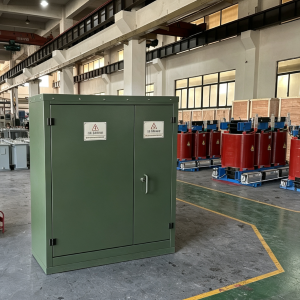
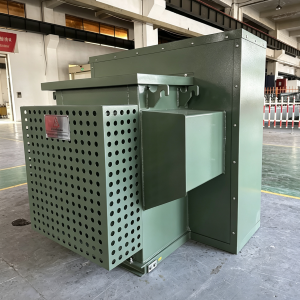
American-style compact substations are commonly based on the concept of a pad-mounted transformer. They are designed to place the transformer and medium-voltage switching and protection equipment into a relatively integrated, outdoor enclosure.
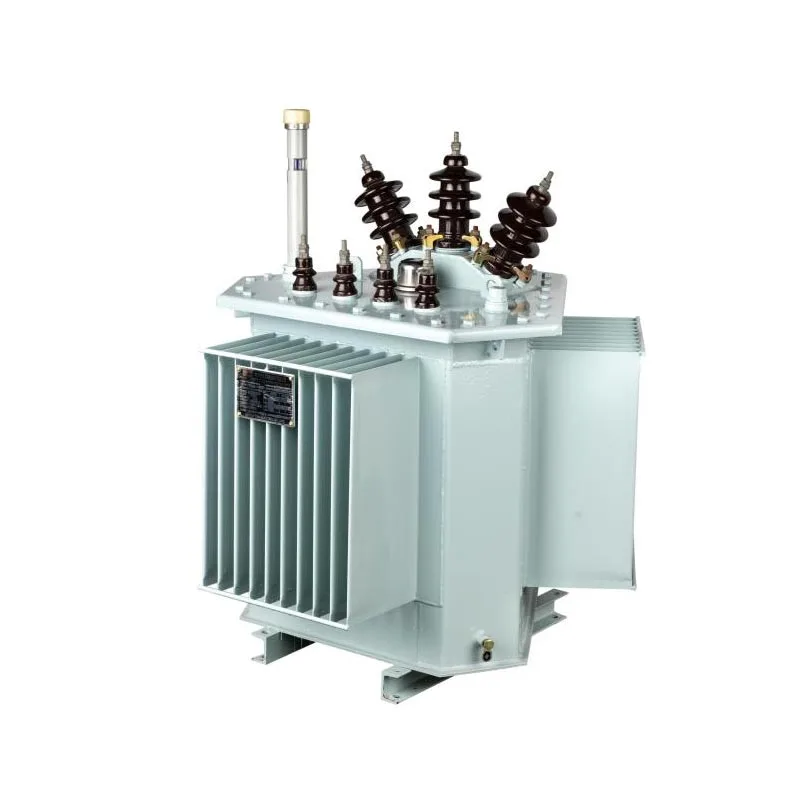
In many configurations, the transformer is oil-immersed and the MV switching or fuse equipment is incorporated into the same overall tank or enclosure. This integrated approach can reduce the number of separate components and simplify installation, particularly for straightforward distribution applications.
Main Advantages
1. Compact installation
The integrated arrangement can provide a relatively small footprint compared with some compartmentalized prefabricated substation designs. This can be useful in residential developments, commercial areas and distribution points where land availability is limited.
2. Simple system configuration
For radial distribution systems with relatively straightforward protection requirements, a pad-mounted arrangement can provide a practical solution without requiring a large number of separate MV and LV panels.
3. Fast installation
Factory assembly reduces the amount of electrical assembly required at the project site. After the foundation, cable connections and other site requirements are prepared, the unit can generally be installed more quickly than a conventional site-built substation.
4. Cost efficiency for suitable applications
An integrated design can reduce enclosure size, equipment quantity and installation work. As a result, American-style solutions can be economically attractive when the project does not require extensive protection, automation or future expansion.
Limitations to Consider
The main limitation is not that American-style substations lack advanced equipment, but that their integrated architecture can be less flexible when a project requires extensive MV protection, multiple feeders, complex control or future expansion.
Fuse-based protection is common in many pad-mounted transformer applications, but circuit-breaker and vacuum-switching configurations are also available for certain designs. Therefore, the actual protection scheme should always be evaluated according to the transformer rating, network fault level, coordination requirements and local utility specifications.
Maintenance procedures also depend on the specific construction. Because several functions may be integrated into one enclosure, access and isolation requirements should be reviewed carefully before equipment is selected.
European-Style Compact Substation
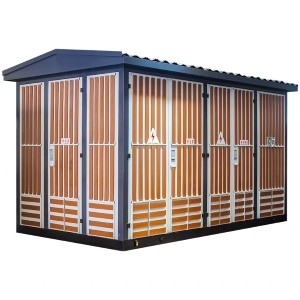
European-style compact substations generally follow a more compartmentalized architecture. A typical configuration provides dedicated areas for medium-voltage switchgear, the transformer and low-voltage distribution equipment.
However, the number and arrangement of compartments are not fixed. Commercial products may use two, three or more compartments depending on the transformer, MV equipment and LV configuration. For example, ABB compact secondary substations are available with different compartment arrangements and equipment configurations rather than one universal layout.
This modular approach makes European-style designs particularly suitable for projects where protection, accessibility, feeder configuration and future expansion are important.
Main Advantages
1. Flexible MV protection
The MV section can be configured with load-break switches, ring main units, fuses, vacuum circuit breakers or other equipment depending on project requirements.
For more complex distribution systems, circuit-breaker-based protection can provide greater flexibility for fault protection, selectivity and control.
2. Separate equipment areas
Separating MV switchgear, transformer and LV equipment can improve equipment access and simplify inspection and maintenance planning. It also allows different electrical functions to be designed and tested as part of a coordinated prefabricated solution.
This does not mean that individual compartments can automatically be serviced while the rest of the substation remains energized. Safe isolation and maintenance procedures must still follow the equipment design and applicable safety requirements.
3. Better integration with automation
European-style configurations can accommodate protection relays, metering, remote monitoring, communication equipment and other control functions. This makes them suitable for distribution networks where digital monitoring or automation is required.
IEC 62271-212:2022 also addresses compact equipment assemblies for distribution substations up to 52 kV and recognizes the integration of control, communication and smart-grid-related devices within such equipment concepts.
4. Flexible transformer selection
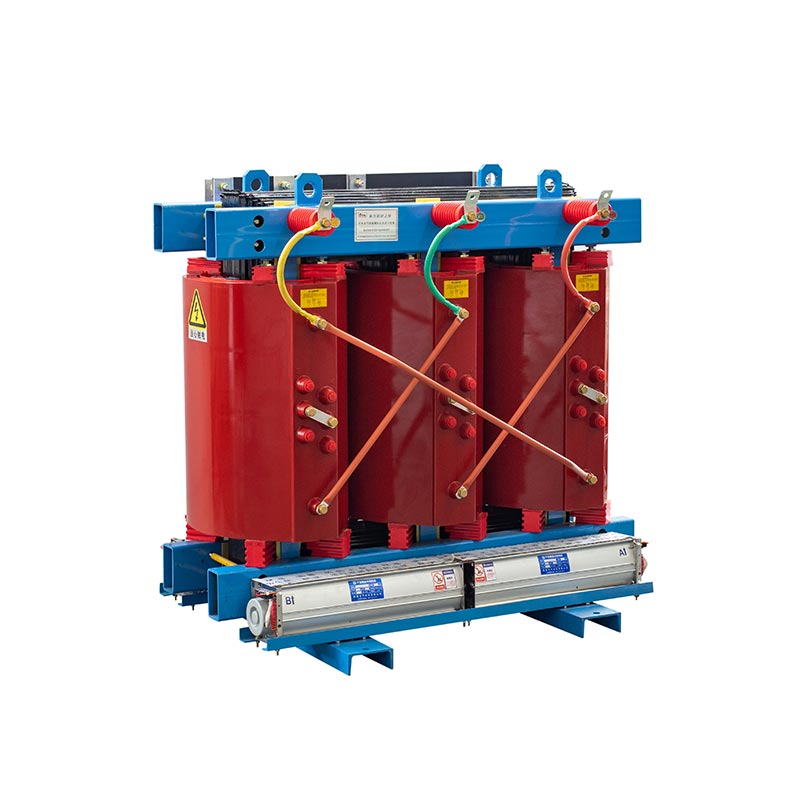
Depending on the enclosure and project requirements, the transformer can be oil-immersed or dry-type. This provides additional flexibility for indoor, urban, commercial and environmentally sensitive applications.
5. Internal arc protection can be specified
For substations installed in locations accessible to the public, internal arc performance can be an important project requirement. IEC 62271-202 includes requirements and test methods relevant to prefabricated substations, while Internal Arc Classification (IAC) can be specified according to the intended accessibility and tested configuration.
American vs. European: Key Differences
The following comparison provides a practical starting point. Actual specifications should always be confirmed against the project design and applicable standards.
|
Feature |
American-Style |
European-Style |
|
Basic concept |
Integrated pad-mounted configuration |
Compartmentalized prefabricated configuration |
|
MV equipment |
Switches and fuses are common; other options may be available |
RMU, load switches, fuses and circuit breakers available |
|
Transformer |
Typically oil-immersed |
Oil-immersed or dry-type |
|
Footprint |
Generally compact |
Generally larger for comparable configurations |
|
Protection |
Often simpler for basic distribution |
More flexible for complex protection schemes |
|
Maintenance |
Integrated construction may restrict access |
Separate compartments can improve access |
|
Automation |
Available depending on configuration |
Generally easier to integrate advanced control |
|
Expansion |
More limited in some integrated designs |
Generally more flexible |
|
Typical applications |
Residential and straightforward distribution |
Industrial, commercial, renewable energy and complex distribution |
|
Cost |
Often economical for simple configurations |
May be higher as equipment and protection requirements increase |
One important point is that there is no universal capacity limit separating the two designs. Both American-style and European-style substations are available in a wide range of ratings, and the practical capacity depends on the transformer, enclosure, cooling conditions, MV equipment and project requirements.
How to Choose the Right Configuration
Choosing the right compact substation should begin with the electrical requirements rather than the product name.
Choose an American-Style Design When:
- The project has a relatively simple distribution network.
- A compact outdoor installation is important.
- The system uses straightforward radial distribution.
- Fast factory installation is preferred.
- The project prioritizes cost efficiency without requiring extensive automation.
- A pad-mounted transformer arrangement is already accepted by the local utility or project specification.
Typical applications include residential distribution, commercial loads, small industrial facilities, construction sites and other locations where a simple and compact distribution solution is appropriate.
Choose a European-Style Design When:
- Multiple MV or LV feeders are required.
- More sophisticated protection and control are needed.
- The project requires RMU or circuit-breaker configurations.
- Remote monitoring or distribution automation is part of the system.
- Future expansion is expected.
- Internal arc classification or other specific safety requirements apply.
- The project uses oil-immersed or dry-type transformers according to environmental or installation requirements.
Industrial plants, commercial complexes, renewable energy projects, infrastructure and other technically demanding applications can benefit from this additional configuration flexibility.
TAILI Electric Compact Substation Solutions
TAILI Electric provides customized distribution solutions for customers who need transformers, medium-voltage switchgear and integrated substation equipment from one manufacturer.
Our product range includes oil-immersed transformers, dry-type transformers, MV switchgear, RMU and prefabricated substation solutions. Depending on project requirements, the configuration can be developed around different transformer ratings, MV voltages, protection schemes, LV feeder arrangements and enclosure requirements.
For international projects, TAILI can also discuss technical requirements such as IEC-based design, transformer specifications, MV switchgear configuration, cable connection, enclosure design and internal arc protection requirements.
Rather than recommending one design for every application, we evaluate the project conditions first and then select the appropriate equipment configuration.
If you are comparing an American-style pad-mounted solution with a European-style prefabricated substation, send us your transformer capacity, MV/LV voltage, number of feeders, installation location and applicable standard. TAILI Electric can help you develop a practical configuration and quotation based on the actual project requirements.
Related News
- A Practical Guide to SF₆-Free Switchgear for Medium-Voltage Applications
- Why Keep Gas Moisture Below 15 ppm in Eco-Friendly Switchgear?
- How to Choose the Right Medium Voltage Switchgear for Your Power Distribution Project?
- Why Choose a Load Switch-Fuse Combination Over a Circuit Breaker?
- Air vs Solid SF₆-Free 12kV Ring Main Unit – Which One Fits Your Project?
- Why Choose Skid-Mounted Substation for Solar Projects in South America?
Leave me a message